Source caterpillar starting motor solenoid for Generator, Industrial, and Flow Control
Compare 30 verified listings for the caterpillar starting motor solenoid from suppliers in China and Germany. Buyers can review specifications, certifications, and delivery times for generator, industrial, and flow control applications.
Key considerations
Products List




Comprehensive Sourcing Guide
Strategic Sourcing Guide for Caterpillar Starting Motor Solenoids
Understanding the Technical Landscape and Component Specifications
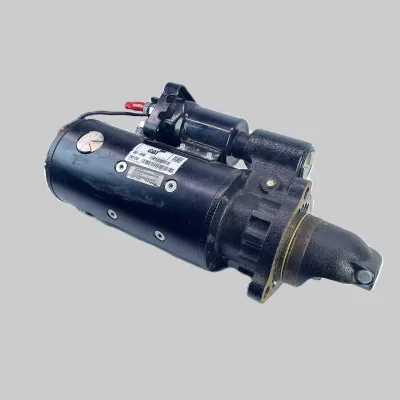
When sourcing a Caterpillar starting motor solenoid, buyers must first navigate a complex array of technical specifications that define the component's compatibility and operational integrity. The core keyword implies a specific application within heavy-duty machinery, yet the actual market data reveals a diverse range of models and configurations. Based on the available product attributes, the solenoid actuator is fundamentally electric, designed to engage the starter motor through a high-current switching mechanism. The observed product models include specific identifiers such as 84-153-12V, 13-204-12V, 30-601X-24V, and 13-2003-24V, indicating that voltage ratings are a primary differentiator. These models suggest the existence of both 12-volt and 24-volt systems, which is critical for matching the solenoid to the specific electrical architecture of the Caterpillar equipment in question.
The physical and material properties of these components vary significantly across listings. While some products are constructed from steel, others utilize copper or carbon steel, with iron also appearing as a material option in specific contexts. The distinction between copper and steel is particularly relevant for electrical conductivity and thermal resistance, while carbon steel often implies a focus on structural durability under high stress. The production techniques observed include "Push" and "Casting," which dictate the manufacturing process and the resulting mechanical tolerances. Furthermore, the weight of these units ranges from 1.0 kg to 2.6 kg, a factor that influences logistics planning and installation requirements. Buyers must verify that the specific model number aligns with the original equipment manufacturer (OEM) requirements, as the generic term "solenoid" encompasses a wide spectrum of electrical and mechanical designs. The application is explicitly defined as a "Starter Solenoid," confirming its role in the ignition sequence of the engine.
Compliance, Certification, and Regulatory Standards
Navigating the compliance landscape is essential for ensuring that sourced solenoids meet international safety and quality benchmarks. The observed product data highlights several certifications and standards that serve as indicators of quality assurance. ISO certification appears frequently, suggesting adherence to international management system standards. Additionally, CE marking is noted, which is a mandatory conformity mark for products sold within the European Economic Area, indicating compliance with health, safety, and environmental protection standards. However, buyers must exercise caution, as some entries list certifications alongside materials in a combined format, such as "CE, ISO Material: Copper," requiring careful parsing to ensure the certification applies to the specific unit being purchased.
Beyond general certifications, specific technical standards are referenced in the product attributes. The "Standard Component" designation and the "Standard" classification imply that certain units meet baseline industry expectations. More granular standards include GB (Guobiao), which are Chinese national standards, and a specific dimensional standard noted as "555," likely referring to packaging or mounting dimensions. The HS code 8511909000 is observed, which classifies these items under electrical ignition or starting equipment for spark-ignition internal combustion engines. This classification is vital for customs declarations and duty calculations. Buyers should verify that the supplier can provide valid documentation for these certifications, as the presence of a certification label on a listing does not guarantee the specific batch of goods has undergone the requisite testing. The origin of the products varies, with listings indicating origins in both China and Germany, which may influence the perceived quality and the applicable regulatory framework for the buyer's region.
Cost Drivers and Pricing Dynamics
The pricing structure for Caterpillar starting motor solenoids is influenced by a multitude of factors, creating a wide range of observed costs. The market data indicates a price range spanning from 1 USD to 899 USD. This vast disparity suggests that the "Caterpillar starting motor solenoid" keyword aggregates products of vastly different quality tiers, origins, and specifications. The lower end of the spectrum likely corresponds to generic or aftermarket components, while the higher end may reflect premium OEM-equivalent parts or those with specialized engineering.
Several key drivers contribute to these cost variations. First, the material composition plays a significant role; components utilizing copper for electrical contacts generally command a higher price than those relying on steel or iron due to superior conductivity and longevity. Second, the complexity of the actuation mechanism, whether it involves simple casting or more advanced "Push" technics, affects manufacturing costs. Third, the voltage rating and specific model number (e.g., 24V vs. 12V) can influence the internal winding design and insulation requirements, thereby impacting the final price. The packaging method, ranging from standard brown boxes to custom packaging, also adds a variable cost layer.
Buyers must be wary of prices that seem anomalously low, as they may indicate compromised quality or non-compliant products. Conversely, the upper limit of nearly 900 USD requires justification through specific performance claims or exclusive OEM status. The Minimum Order Quantity (MOQ) also interacts with pricing, with observed ranges from 1 to 200 units. Smaller orders may incur a higher unit cost due to setup fees, while bulk purchases might leverage economies of scale. Understanding these dynamics is crucial for budgeting and ensuring that the selected solenoid offers the best value proposition without sacrificing critical performance attributes.
Typical Applications and Operational Environments
The operational context of the Caterpillar starting motor solenoid is defined by its intended application and environmental resilience. The primary application is clearly identified as "Generator" usage, which is a common configuration for heavy-duty machinery where reliable starting is paramount. However, the product attributes also list "Industrial Usage" and "Water Industrial Usage," suggesting versatility in broader industrial settings. The solenoid is designed to handle specific media, with "Oil" explicitly mentioned, indicating that the component may be exposed to lubricants or hydraulic fluids in its operating environment.
Environmental conditions are another critical consideration. The observed attribute "High Temperature" suggests that certain models are engineered to withstand elevated thermal loads, which is typical for engine compartments where heat dissipation can be challenging. The usage categories include "Flow Control," "Temperature Control," "Drain," "Emptying," and "Safety," which implies that the solenoid may serve multiple functions within the hydraulic or pneumatic systems of the machinery, not just the primary starting function. The "Multiple Language" attribute on the product listing indicates that the documentation or interface may be adaptable for international deployment, a common requirement for global industrial operations.
Buyers must ensure that the solenoid's temperature rating and material resistance match the specific operating conditions of their equipment. For instance, a solenoid designed for "Water Industrial Usage" may require different sealing properties compared to one used in a dry, high-temperature engine bay. The weight of the unit, ranging from 1.0 kg to 2.6 kg, also impacts the mounting and vibration damping requirements, especially in mobile or vibrating machinery.
Supplier Evaluation and Origin Verification
Evaluating suppliers for starting motor solenoids requires a rigorous assessment of their capabilities, origins, and transparency. The product data reveals a mix of origins, with China and Germany being the primary locations cited. This geographic diversity presents both opportunities and challenges. German-origin products often carry an expectation of high precision engineering and adherence to strict quality controls, while Chinese-origin products may offer competitive pricing and high customization capabilities. The "Brand" attribute lists "Guangling" and "Zfsolenoid," which are specific identifiers that buyers should cross-reference with their own supply chain databases to verify authenticity and reputation.
When evaluating a supplier, buyers should look for evidence of the "Customization" attribute, which is listed as available. This suggests that suppliers may offer tailored solutions for specific model requirements, such as unique voltage ratings or mounting configurations. The "Warranty" attribute, with a common offering of "1 Year," provides a baseline for post-purchase support. However, the warranty terms should be scrutinized to understand what is covered, particularly regarding the "Delivery Time," which varies from "After Paid 2 days" to a standard "45 Days." These lead times significantly impact inventory planning and operational continuity.
Buyers must also verify the "Standard" and "Standard Component" claims. A supplier claiming to meet "Standard Component" specifications should be able to provide detailed technical drawings and material certificates. The presence of "HS: 8511909000" in the data is a positive indicator of compliance with international trade classifications, but it does not guarantee the quality of the goods. It is essential to request samples and test reports before committing to large orders, especially given the wide variance in observed prices and materials.
Quality Control and Long-Term Procurement Considerations
Ensuring the long-term reliability of Caterpillar starting motor solenoids requires a robust quality control strategy. The observed "Condition: New" is a baseline requirement, but buyers must go further to verify the integrity of the manufacturing process. The "Technics" of "Push" and "Casting" indicate different production methods, each with its own quality control checkpoints. For instance, casting processes require careful monitoring of cooling rates and material purity to prevent defects like porosity, while push-type mechanisms need precise alignment and force calibration.
The "Packaging" options, ranging from "Brown Box" to "Customization," play a crucial role in protecting the solenoid during transit. Improper packaging can lead to physical damage, particularly for components with delicate electrical contacts or precision-machined parts. Buyers should insist on packaging that protects against moisture, vibration, and physical impact, especially for units with a "High Temperature" rating that may be sensitive to environmental changes during shipping.
Long-term procurement considerations involve establishing a relationship with suppliers who can provide consistent quality over time. The "Warranty: 1 Year" is a starting point, but buyers should negotiate terms that reflect the critical nature of the component in their operations. The "Delivery Time" of 45 days versus 2 days post-payment highlights the need for strategic inventory management. For critical machinery, maintaining a buffer stock of solenoids is advisable to mitigate the risk of downtime. Additionally, buyers should monitor the "Material" consistency, ensuring that the steel, copper, or carbon steel used in production remains stable and meets the specified standards. Regular audits of the supplier's quality management system, particularly regarding ISO and CE compliance, will help maintain the integrity of the supply chain and ensure that the solenoids continue to perform reliably in demanding industrial and generator applications.
FAQs
What certifications do caterpillar starting motor solenoids have?
These solenoids typically hold ISO and CE certifications. Some listings also mention specific material standards like copper or iron, ensuring compliance with international safety and quality benchmarks for heavy-duty machinery applications.
Which materials are used for these solenoids?
Manufacturers use steel, copper, carbon steel, and iron for construction. Copper offers superior conductivity while carbon steel provides structural durability, allowing selection based on specific electrical and mechanical requirements.
How long is the delivery time for these units?
Delivery times vary significantly between 2 days after payment and 45 days. Buyers must verify the specific lead time with the supplier to ensure it aligns with their operational schedule and inventory planning needs.
Can I request customization for these solenoids?
Yes, customization is available for packaging and specific model requirements. Buyers can choose between brown boxes or custom packaging and may request tailored specifications to match their unique machinery configurations.
What is the warranty period for these products?
A standard warranty of 1 year is commonly offered for these units. This coverage provides a baseline for post-purchase support, though specific terms should be confirmed with the supplier before finalizing the order.
Which origin countries supply these solenoids?
Products originate from both China and Germany. German origins often imply high precision engineering, while Chinese origins may offer competitive pricing and extensive customization capabilities for various industrial applications.
What is the price range for these solenoids?
Prices range from 1 USD to 899 USD depending on the model and quality. The wide variance reflects differences in materials, voltage ratings, and whether the part is a generic aftermarket component or a premium OEM-equivalent.